

Bad timing: Travel, illness, caregiving, or an unpredictable schedule can stall your progress. Re-start your current program or start another one when you’re ready to fully engage.
Putting the strategies into practice: Some of the most important parts of CBTi can also be the hardest to follow, especially at first. Keeping a daily sleep diary, getting out of bed during the night when you’re not sleeping, and temporarily spending less time in bed can be difficult. But putting these strategies into practice consistently is often important for improving sleep. If you weren’t able to follow them closely the first time, that doesn’t mean CBTi won’t work for you. Consider trying again, knowing that these early challenges can be part of the process of getting better sleep, or choose a program that offers more guidance and support.
Other sleep problems: Sleep apnea, restless legs, and other sleep problems can limit the impact of CBTi. CBTi can be tried again once treatment for these other sleep problems gets started. See your healthcare professional to discuss other possible sleep problems and their treatments.
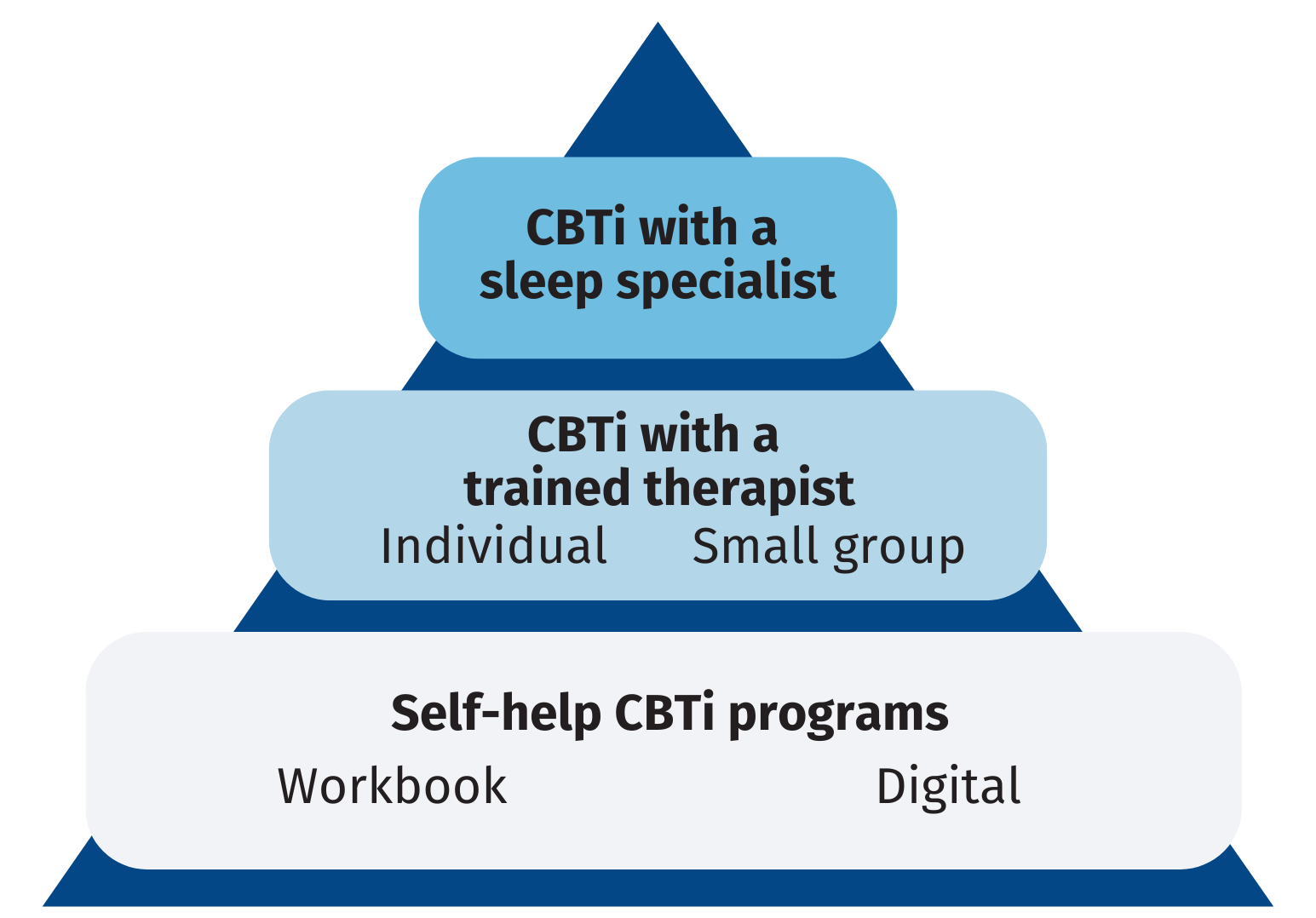
Format: CBTi is available in several formats, including self-help books, digital programs, group programs, and one-to-one therapy. If one format wasn’t a good fit for you, consider trying another. While the core components are similar, different formats vary in the amount of guidance, support, and personalization they provide.
Too short: If you’re around 4 weeks into CBTi, keep using all the CBTi components for 4 more weeks. If you’re not satisfied after 8 weeks, try a different CBTi program.